 Ply Yard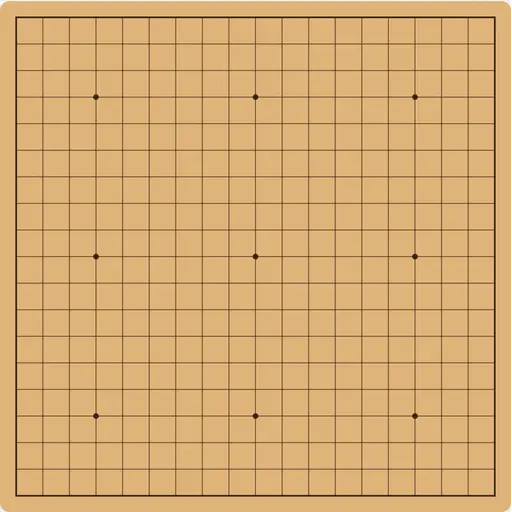
About Connect6
Connect6 must be analyzed as a coordinated pair of placements, not as gomoku with a longer winning line. Two points can jointly complete a pattern or defend different attacks, while the opponent also normally has two placements to respond. Accurate calculation checks the true winning-point sets, alternative lines, and the board's submission and termination behavior. The alternating one-stone count advantage explains the turn structure without proving a solved or perfectly balanced starting position.
- Ruleset covered
- 19×19 Connect6: Black opens with one stone; subsequent normal turns place two
- Updated
- · Editorial policy and corrections
Connect6Rules and variant distinctions
One opening stone, then two stones per normal turn
Connect6 uses the intersections of a 19×19 board. Black starts with one stone; White then places two, and subsequent normal turns place two stones each. Stones must occupy empty intersections. There are no captures, forbidden-move restrictions, or handicap placements in the version described here. The two-stone turn structure is intended to reduce the opening advantage associated with one-stone connection games. After Black's opening the counts are one to zero; after White's first turn, one to two; after Black's next turn, three to two. At the end of an ordinary completed turn, the player who just moved has one more stone on the board. That alternating numerical lead is not proof that the game is perfectly balanced or that optimal play must draw. Evaluate the actual threats and the opponent's two-stone reply rather than treating the placement schedule as a mathematical guarantee of fairness.
Select and evaluate the pair as one move
On Ply Yard, select empty intersections to place stones. Black's opening selection submits the one-stone move. On subsequent turns, select the first point and then the second to complete the normal move. Before selecting the second, selecting the first point again cancels that pending choice. A partial selection is not an ordinary completed two-stone turn. The two points need not be adjacent or on the same line. They may complete one pattern together, extend different lines, or combine attack with defense. Analyze the position after both placements and include both stones of the opponent's normal reply. Distinguish a pending interface selection from a declared game result. Once the board records six in a row and ends the game, do not assume you may continue placing an unused second stone. In review, check the order of selection and the board's actual submission and termination behavior.
Build coordinated threats and cover both ends
A first stone near the center is a practical starting point because lines can develop horizontally, vertically, and along both diagonals with room to extend. The exact central intersection is not mandatory. Edge and corner placements are legal, but they offer less room in some directions. Before selecting an attacking pair, inspect the opponent's ways to reach six on the next turn. For a simple open line of four with sufficient space beyond both ends, blocking only one end can leave the other available for two consecutive placements. Occupying both immediate endpoints can stop that particular straight-line extension. This is a local defensive example, not proof that the whole position is safe. Check other lines and alternative completion points. Likewise, spreading two attacking stones across different directions is useful only when the resulting threats are concrete; it is not automatically better than extending one line with both stones.
Six or more in a row wins; overlines are legal
A continuous line of at least six of your stones horizontally, vertically, or diagonally wins. Seven or eight in a row also qualify: this board does not apply an overline prohibition. An empty intersection or opposing stone interrupts a line. Placed stones remain on the board. They cannot move, change ownership, or be captured, so future analysis adds placements to the current position rather than removing inconvenient stones. If all 361 intersections are occupied without a winning line, the game is drawn. A winning line takes precedence over a full-board draw. Online players may offer and agree to a draw before the board is full. Keep a normal two-stone move separate from an ended game: there are no extra discretionary placements after a winning result has been declared.
Legal placement and the limits of simple threat counting
You cannot place on an occupied intersection, move or remove an existing stone, act before the opponent has submitted their turn, or submit three or more stones as a normal move. Outside Black's opening exception, a normal completed turn requires two placements; stopping after one is not an ordinary legal turn. A terminal result is a separate matter, not permission to skip a required second placement in continuing play. There is no rule requiring the pair to be adjacent, and no overline restriction. Do not import renju's forbidden moves or the one-stone turn structure of gomoku into this board. When evaluating defense, identify the actual sets of points that complete each opposing line. Two distinct threats are not automatically impossible to meet in one turn because a defender normally has two stones. Conversely, occupying two named points does not establish safety if a line has another winning completion or the opponent can create a different forcing pattern.
Practical strategy
From an empty board, complete Black's one-stone opening and White's first two-stone turn, then Black's next normal turn.
Distinguish the opening exception from later turns. Record the counts as Black one–White zero, Black one–White two, and Black three–White two.
Find a six-point line with two vacancies. Compare filling both with one pair against extending with only one of the two placements.
Explain the pair's combined effect and include the opponent's normal two-stone response. Do not evaluate the first selection as though the turn ends there.
Review a two-stone move, reverse the selection order in a separate analysis, and check when the board submits the move or declares the game over.
Do not assume that completing six leaves an unrestricted extra placement. Distinguish pending selections, a normal completed turn, and a declared terminal result.
A common misconception
Any two separate six-in-a-row threats are impossible to answer within one turn.
A normal turn has two placements. Check the actual completion points of every threatening line before concluding that the defense is insufficient.
Position study: One two-stone turn can defend two identified points
White has a horizontal line and a vertical line, each with an identified critical empty point for a six-in-a-row completion on White's next turn. Call the distinct points A and B. It is Black's normal two-stone turn, and Black has no winning move this turn.
Why might Black be able to defend both A and B?
Show the answer and analysis
Black can use the two placements to occupy A and B. However, each White line must be checked for alternative completion points before the position is declared safe. Blocking the two named points does not automatically neutralize every possible continuation.
Compare the threat structure with the number of defensive placements available in one turn. A double threat does not automatically have the same force here as in a one-stone connection game; evaluate the actual winning-point sets and the complete paired reply.
This position was constructed for instruction. It is not a tournament record or an engine-verified proof of an optimal move. Evaluate it under the stated conditions; do not assume unlisted features of the complete position.
Structured practice
Understand the rules
From an empty board, complete Black's one-stone opening and White's first two-stone turn.
Assessment: Identify the opening exception and the normal paired turn rather than alternating single stones throughout the game.
Compare candidate moves
Find a six-point line with two vacancies and compare filling both with a pair against a one-point extension.
Assessment: Explain the joint contribution of the two placements and the opponent's normal two-stone response.
Review and verify
Review a paired move, test the reverse selection order separately, and verify the board's submission and game-ending behavior.
Assessment: Do not assume that reaching six allows an arbitrary additional second placement after the game has ended.
Frequently asked questions
Why are there two stones per turn after Black's opening?
The paired-turn design is intended to reduce first-player advantage. Black opens with one stone, then both sides normally place two. Completed-turn stone counts alternate a one-stone lead for the player who just moved. That arithmetic does not prove that the opening advantage disappears completely or that optimal play is a draw; threats and responses still require analysis.
Must the two stones be adjacent?
No. Choose any two distinct empty intersections permitted by the current turn. The pair can complete one line, develop separate directions, or combine attack and defense. Neither splitting the stones nor keeping them together is universally best: compare the complete position after both placements and the opponent's two-stone reply.
Does a line longer than six still win?
Yes. This platform accepts six or more consecutive stones of the same color horizontally, vertically, or diagonally. There is no overline prohibition. A line of seven or eight is a winning line, provided the stones are consecutive without an empty intersection or opposing stone breaking the connection.
How does Connect6 differ from gomoku?
Gomoku normally places one stone per turn and aims for five in a row. This Connect6 board uses 19×19 intersections, one opening stone for Black, two stones on subsequent normal turns, and a target of six or more. The paired move changes both attack and defense: two completion points may be filled or blocked within one turn.
What happens when the board is full?
The game is drawn if all 361 intersections are occupied and neither player has completed a winning line. A winning line takes precedence over fullness, so a final placement that completes six is not a full-board draw. In an online room, an accepted draw offer can also end play before every intersection is occupied.
Where should I place the first stone?
Near the center is a practical choice because it leaves room to extend in all four line directions. The exact center is not required, and the rules permit any empty intersection. Starting at an edge or corner limits some extensions, but that strategic drawback is not a legality restriction or a proof that every such opening loses.
Why can Black sometimes defend both A and B in one turn?
In the example, Black has a normal two-stone turn and can occupy both distinct empty points A and B. That can address the two identified White completion points. Before declaring the defense sufficient, check whether either White line has alternative winning points or another forcing continuation. The number of named threats must be compared with the defender's available placements and the actual completion sets.
Are two separate six-in-a-row threats always impossible to block in one turn?
No. A normal turn provides two stones, so two separate critical points may both be occupied. The important question is whether those points cover every relevant winning continuation. Count genuine completion points and examine overlapping or alternative lines rather than importing a one-stone game's double-threat conclusion.
Put your understanding into practice.
Choose one skill to work on in your next game. A clear reason for each move is more useful than an immediate win.
Play Connect6Rules sources and editorial notes
- Current rules for this game on Ply Yard
Identifies the board variant and interface described here. Platform instructions are not a complete statement of every tournament ruleset.
This guide combines the relevant board's rules with independently constructed examples and exercises. It distinguishes basic rules, variant-specific provisions, and strategic advice. Rules sections draw on the sources listed above. Instructional positions have not been presented as exhaustively engine-verified or certified by professional players.
Written by Ply Yard. Independent review by a named professional player has not been completed. To report an issue, send the game, ruleset, position, and relevant source provision to contact@plyyard.com.